
Usage
ramp_smooth(neutral = 45)

ramp_hard(neutral = 45)

ramp_steps(n = 4, neutral = 45, breaks = NULL)
Arguments
- neutral
Angle in degrees between a face and the direction toward the light at which colors are unchanged. Must be greater than 0 and less than 180, or less than 90 for
ramp_hard(). Default is 45.- n
Number of bands, at least 2. Default is 4.
- breaks
Alternative to
nandneutral: angles in degrees between a face and the direction toward the light at which one band ends and the next begins, increasing, greater than 0 and less than 180. Faces at a break fall in the darker band. For example,breaks = 90gives a fully highlighted lit side and a fully shadowed unlit side, andbreaks = c(60, 90)adds a band of unchanged color between them.
Value
A ramp object, for the ramp argument of light().
Details
A ramp decides how brightness changes as a surface turns away from the
light, for use as the ramp argument of light(). Each ramp keeps colors
unchanged on faces at neutral degrees to the light, and moves faces turned
further toward the light toward full highlight, and faces turned further away
toward full shadow. How far toward full highlight and shadow colors go is set
by the highlight and shadow arguments of light().
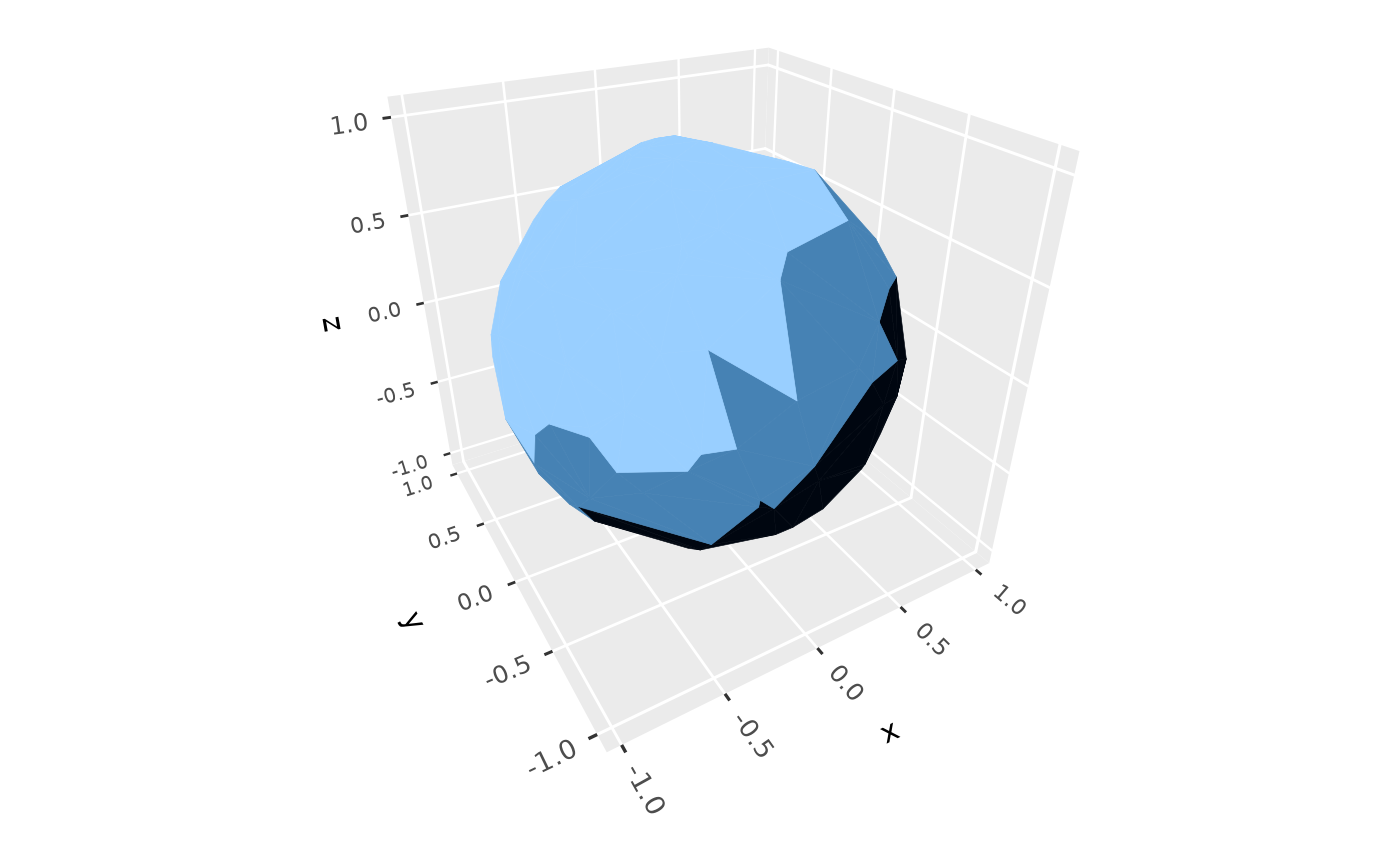
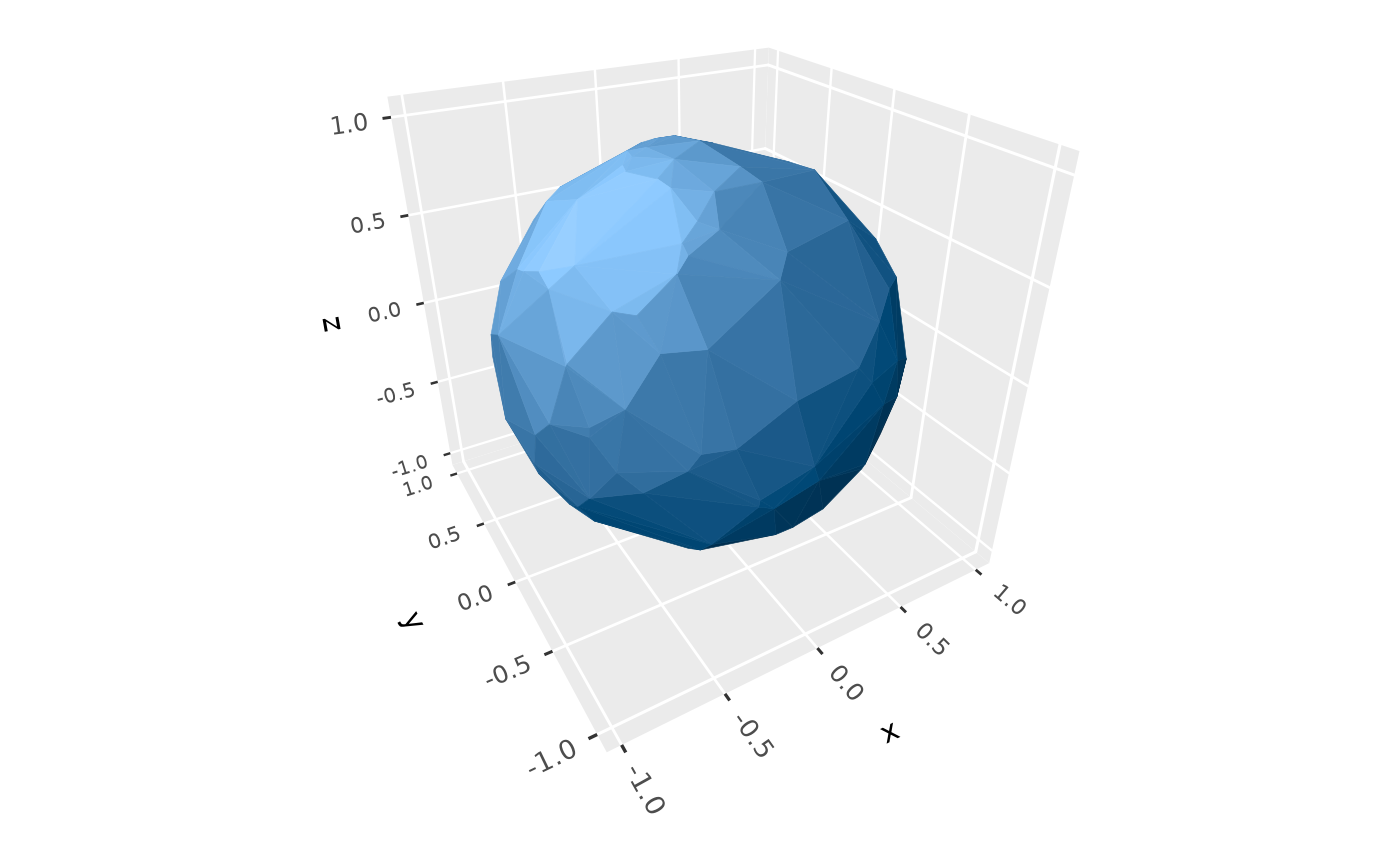
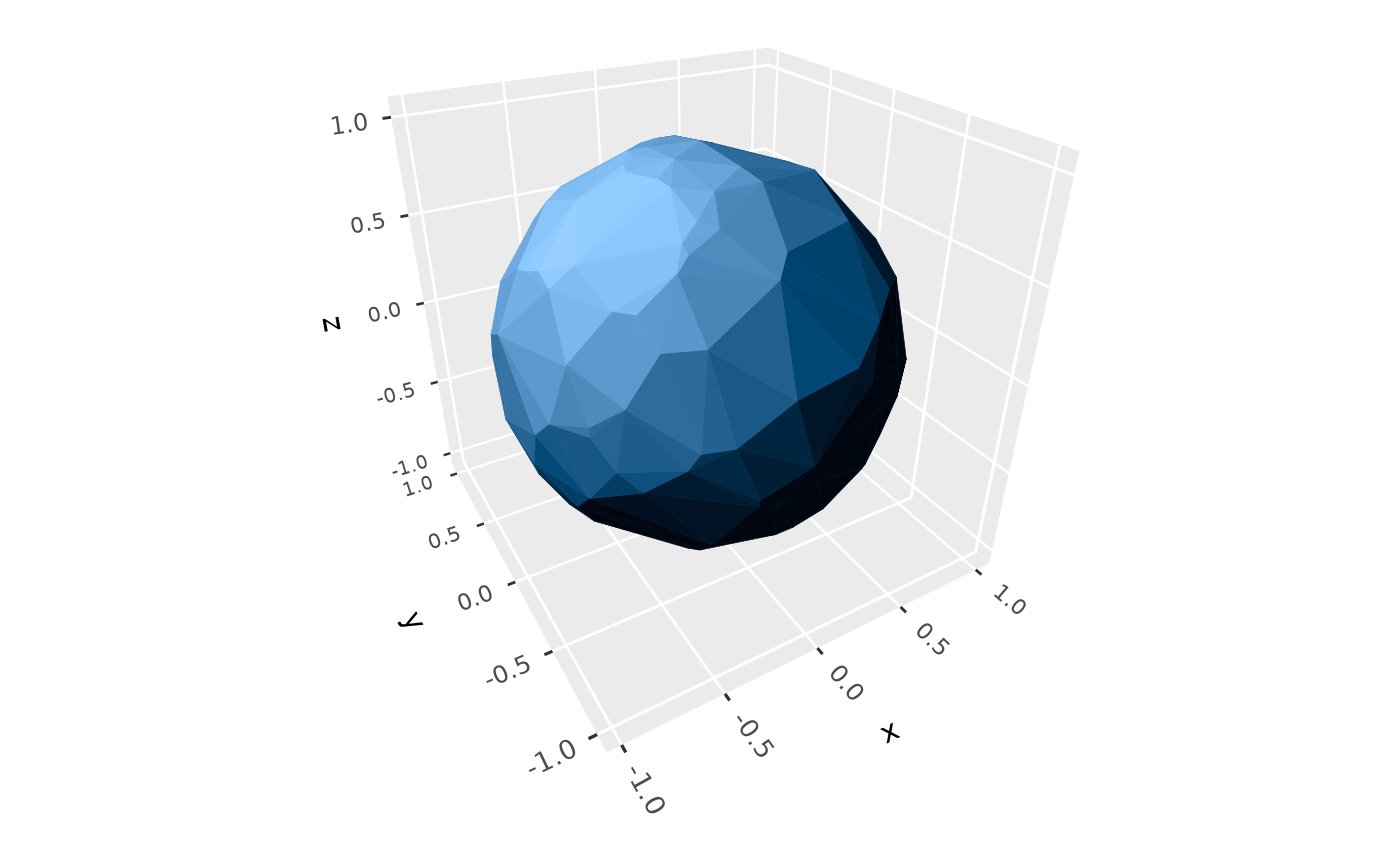
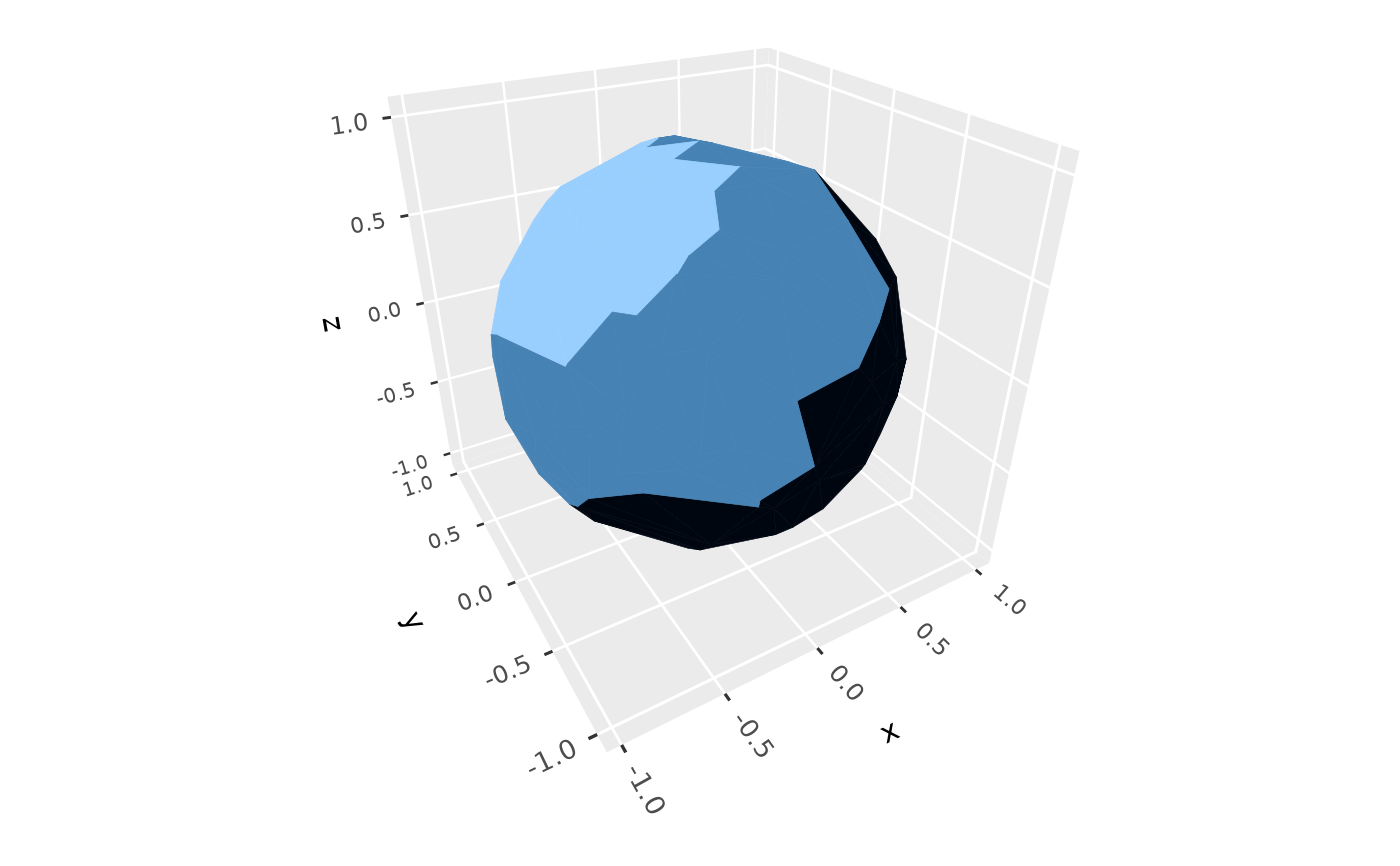
ramp_smooth()changes brightness gradually, reaching full highlight on faces that face the light and full shadow on faces that face directly away from it. This is the default.ramp_hard()is likeramp_smooth()toward the light, but faces at 90 degrees or more from the light are fully shadowed, giving a sharp edge between lit and unlit sides.ramp_steps()divides faces into flat bands of brightness, for a cartoon-like look. The bands run evenly from full highlight on the band nearest the light to full shadow on the band farthest from it, so with an odd number of bands the middle one shows colors unchanged. Bands are eithernequal divisions of the brightness oframp_smooth(), or are divided at the angles given bybreaks. Specular highlights (seelight()) are flat spots too.
These can also be given to light() by name, as "smooth", "hard", or
"steps", to use their defaults.
See also
light(), and tone_lightness() for tones, which decide what lighter
and darker look like.
Examples
p <- ggplot(sphere_points, aes(x, y, z)) +
geom_hull_3d(fill = "steelblue", color = "steelblue") +
coord_3d(scales = "fixed")
p + light(ramp_smooth())
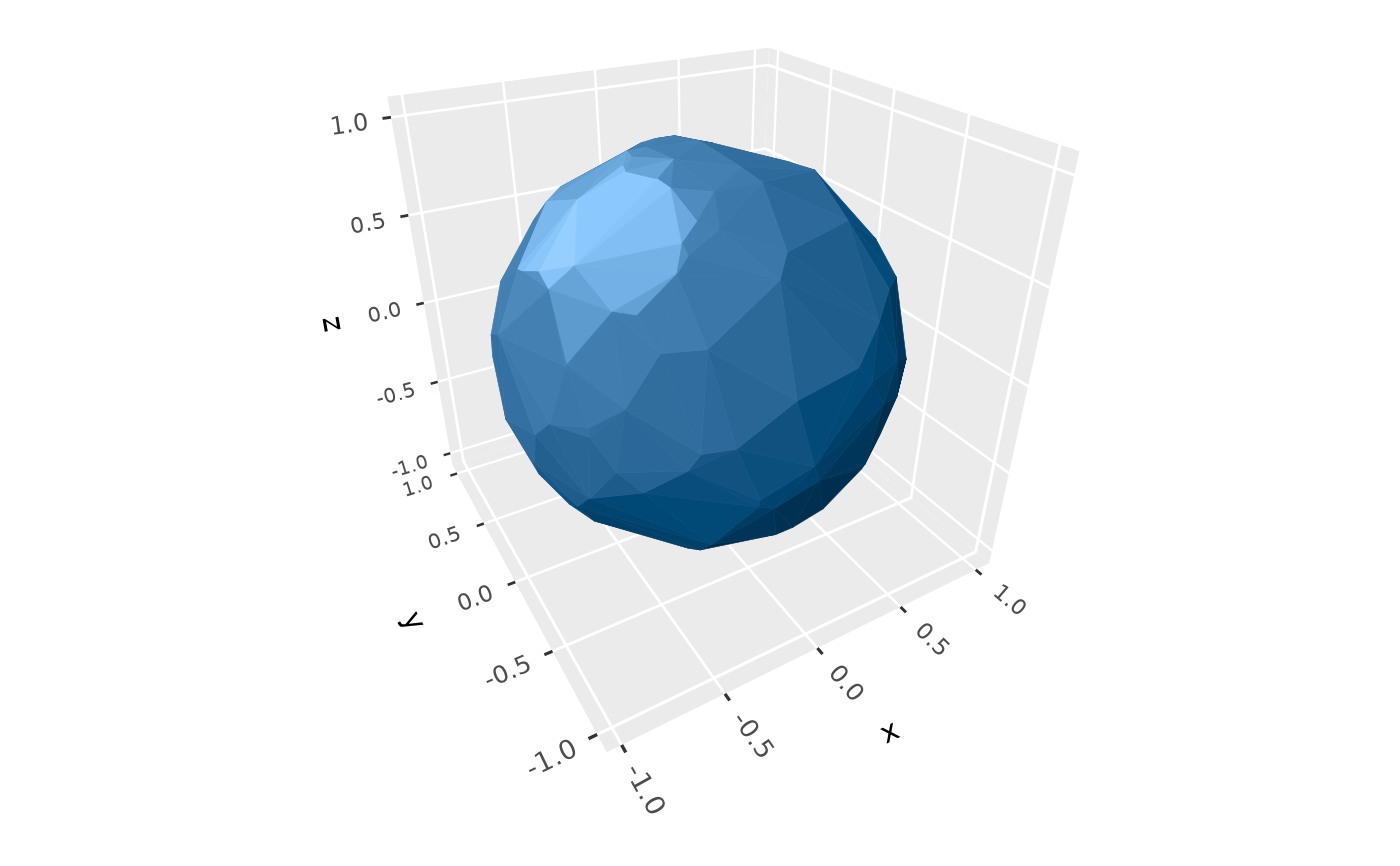
 # base color on faces closer to facing the light, for darker overall shading
p + light(ramp_smooth(neutral = 30))
 p + light(ramp_hard())
 p + light(ramp_steps(n = 3))
 # bands divided at chosen angles from the light
p + light(ramp_steps(breaks = c(60, 90)))