This is a shorthand for scale_z_continuous(limits = c(min, max)).
It's a convenient way to set the z-axis limits without specifying other
scale parameters.
Arguments
- min, max
The minimum and maximum values for the z-axis.
- ...
Additional arguments passed to
scale_z_continuous().
Details
Limits on the z scale work like those set with ggplot2::xlim() and
ggplot2::ylim(): data outside them are removed before stats that summarize
observations, such as hulls and smooths, are computed. Surfaces and other
polygons that cross limits on any axis are cut where they cross them, while
columns, bars, and voxels that extend beyond the limits are removed whole.
Rows of gridded surface data are vertices of the surface rather than
observations, so z limits cut those surfaces rather than removing rows.
See also
scale_z_continuous for more control over z-axis scaling,
xlim, ylim for x and y axis limits
Other 3D scale functions:
scale_z_continuous(),
scale_z_discrete()
Examples
library(ggplot2)
# Set z-axis limits
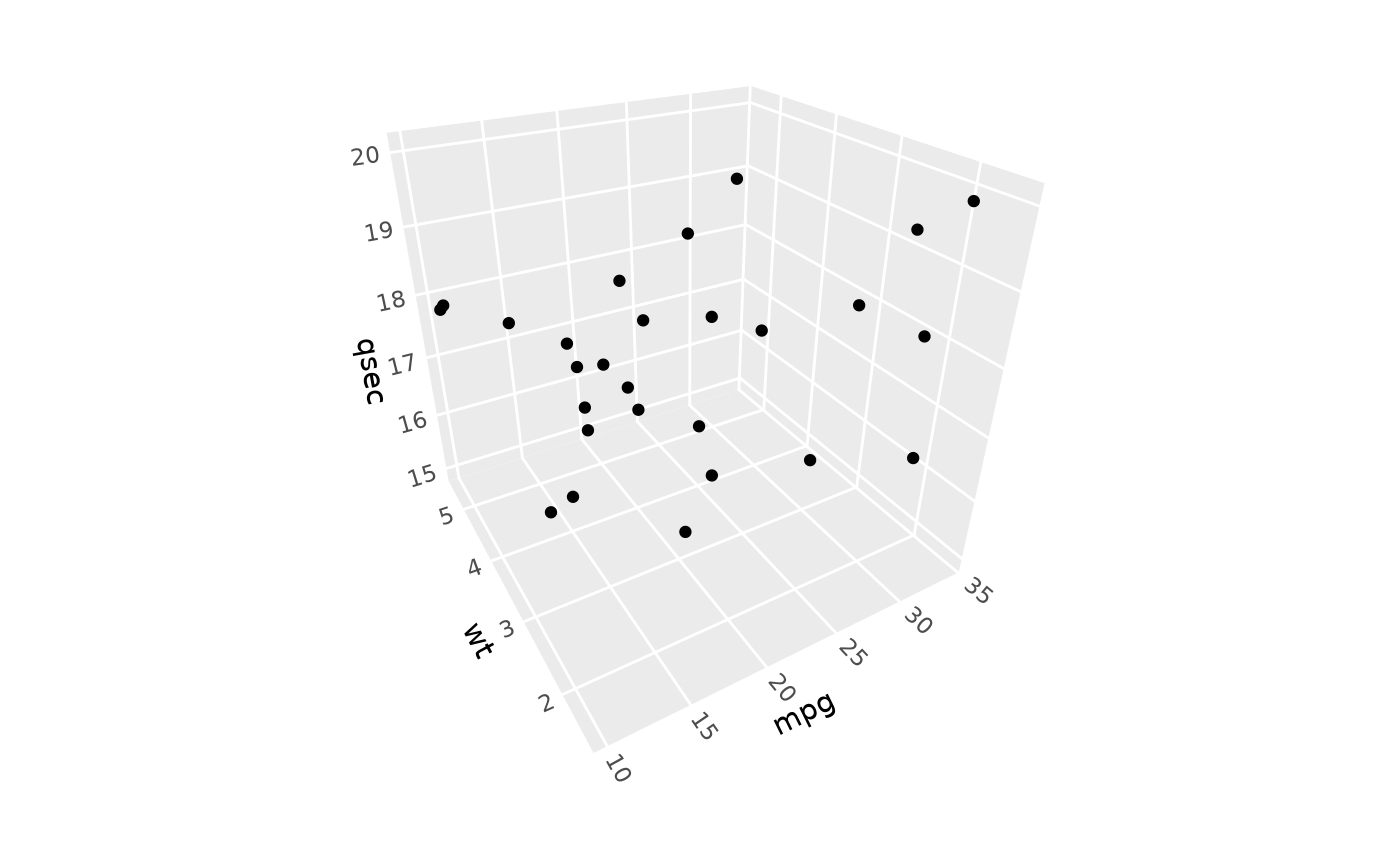
ggplot(mtcars, aes(mpg, wt, z = qsec)) +
geom_point() +
zlim(15, 20) +
coord_3d()
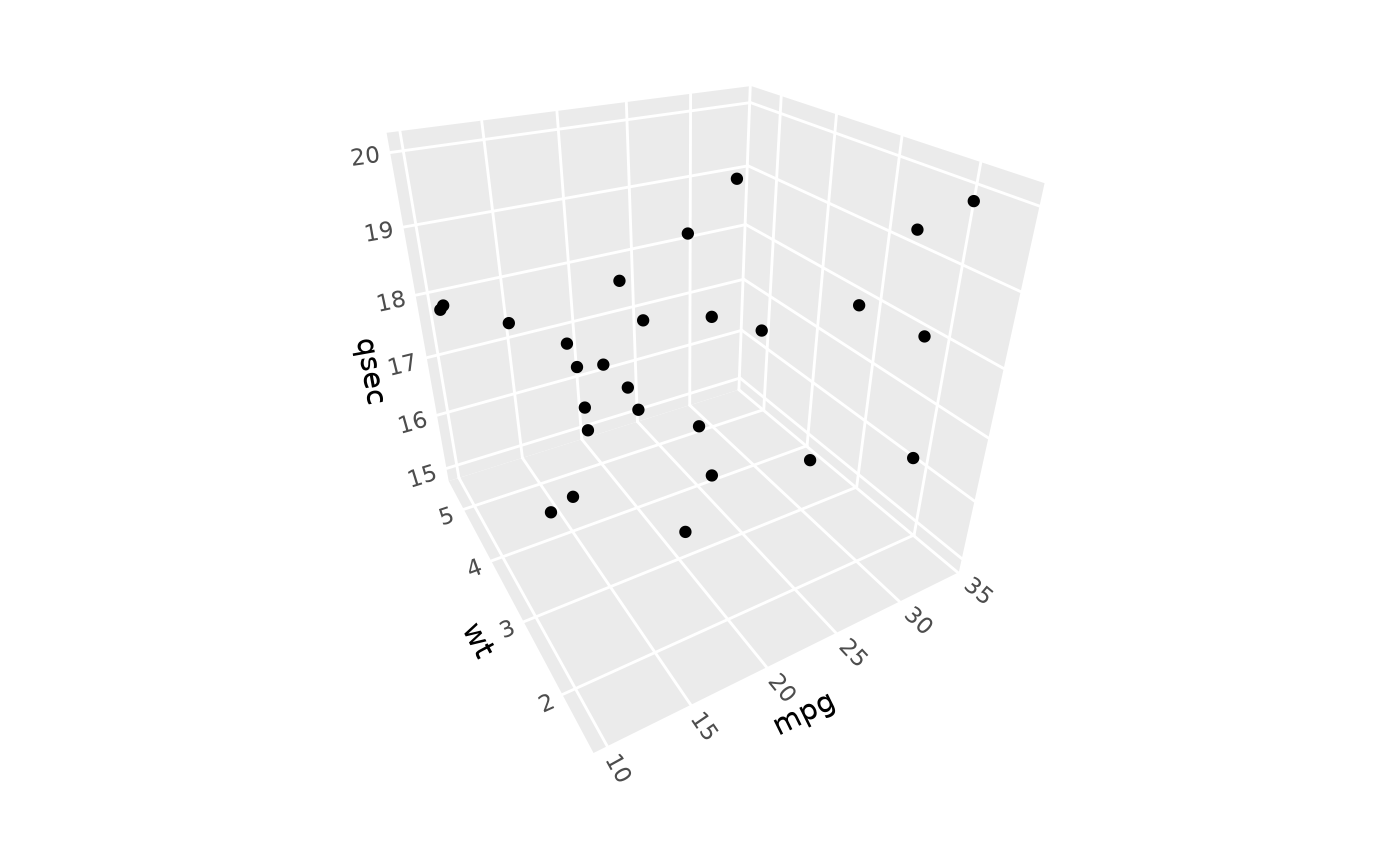 # Equivalent to:
ggplot(mtcars, aes(mpg, wt, z = qsec)) +
geom_point() +
scale_z_continuous(limits = c(15, 20)) +
coord_3d()